Skip to content
Learning Site
Home

About

  • About Robotical
  • Case Studies
  • Meet the Team
  • Blog
  • Contact Us

Our Products

  • Marty the Robot
  • Axiom
  • Cog

Teach

  • Lessons & Resources
  • Marty for Educators
  • Funding & Grants
  • Professional Development
  • Why Teach STEM?
  • Coding Environments
  • Student Led Learning

Let's Code

  • Marty the Robot
  • Code Online
  • Marty Apple App
  • Marty Android App
  • Update your Marty
  • Cog
  • Code Online
  • Cog iOS App
  • Cog Android App
  • Axiom
  • Axiom Science

Support

  • Marty Get Started
  • Cog Quick Start Guide
  • Axiom Science Quick Start Guide
  • Support & FAQs
  • Marty V2 User Guides
  • Marty V1 Resources
  • Request Support
  • Request Top-Up Training

Shop

  • Marty the Robot and Physical Computing
  • Class Packs
  • Add Ons & Extras
  • Account
  • Shipping, Returns & Cancellations
  • Distributors
HomeLessonsUnits of workCurriculum standardsTutorials

Information

  • Lessons & Resources
  • Knowledge Base & User Guides
  • About Us
  • Shipping, Returns & Cancellation
  • Privacy Policy
  • Learning site privacy
  • Terms of Service
  • Partner Hub

Support & Help

  • Support & Help Center
  • Getting Started with Marty V2
  • Getting Started with Marty V1

Learning, Resources & Guides

  • Marty V2 Lessons Site
  • Marty V1 Lessons Site

Contact Us in the UK

Stanhope House,12 Stanhope Place,Edinburgh,United Kingdom,EH12 5HH
(+44) 0131 564 0922
hello@robotical.io
Contact Us

Contact Us in the US

2810N Church St, PMB 61694,Wilmington,Delaware,USA19802-4447
(+1) 833 886 1661
hello@robotical.io
Contact Us

Why not join our mailing list?

For News, New Products and Special Offers

Join mailing list

Copyright 2016-2026 © Robotical Ltd

All lessons
Marty app
CurrentPrevious

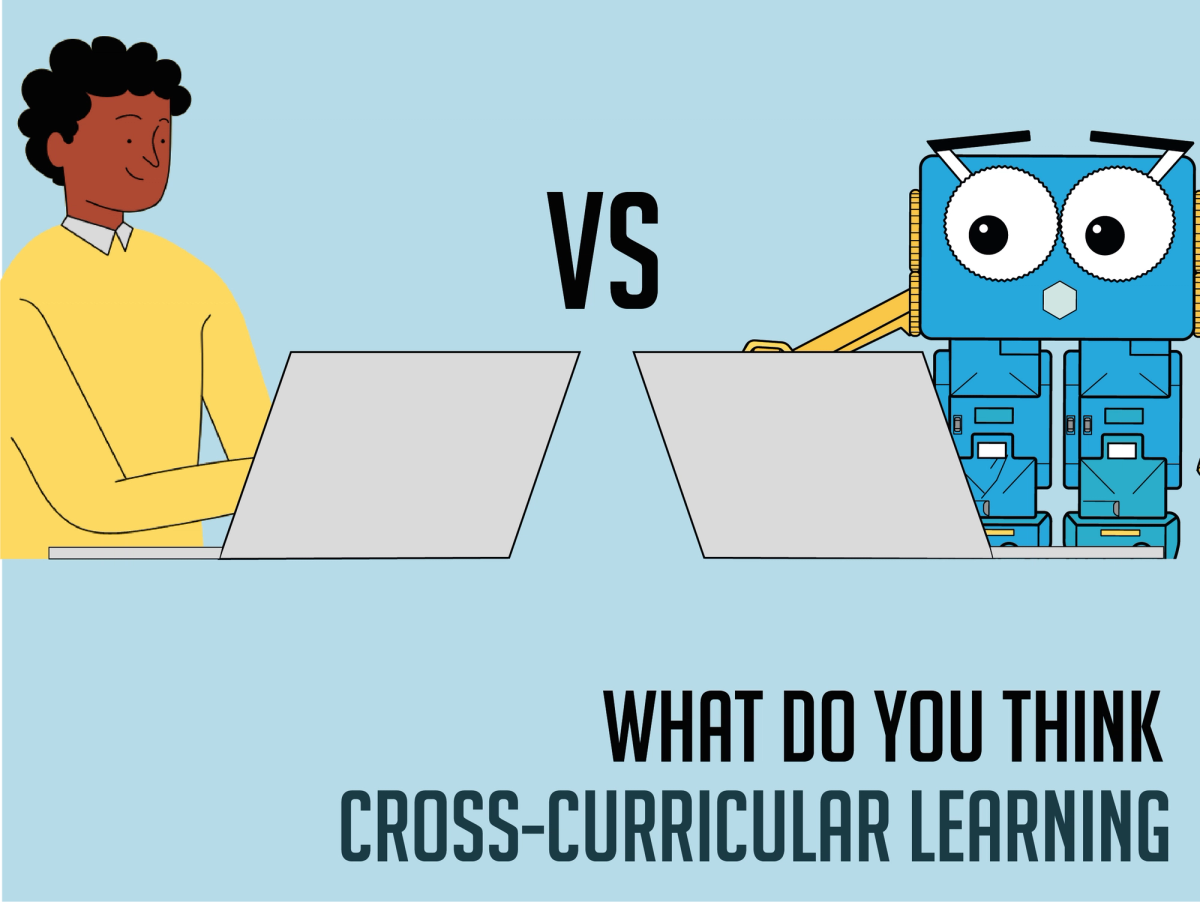
English Language Arts - Middle Years - Lesson 1 - What Do You Think?

Use Marty to show some of the things a robot can do and ask learners to decide if the world is better with or without them.
English Language Arts - Middle Years - Lesson 1 - What Do You Think?
Estimated time
45 minutes
Difficulty
Intermediate
Products
Marty V2

On this page

  1. Lesson overview
  2. Objectives & resources
  3. Key vocabulary
  4. Lesson plan
  5. Extensions and challenges
  6. Additional reading
  7. Curriculum standards

Extensions and challenges

Extend

Encourage learners to research beyond the examples provided. If you have access to the Internet, have learners search for other examples of people and robots completing work related tasks

Support

There is a document with a word bank in the resources section to support learners with their writing. The alternative is to have learners record an audio text or have an adult scribe to support their text creation.

Additional reading

Using MartyBlocks

Curriculum standards

14
Choose your curriculum to see the relevant standards.

14 of 14 linked standards shown.

Common CoreUSA3
Curriculum areaLinked standards
English Language Arts: Speaking & Listening
English Language Arts: Writing

Select a code to read the full standard.

English Language Arts: Speaking & Listening

  • SL.2.1.BBuild on others' talk in conversations by linking their comments to the remarks of others.

English Language Arts: Writing

  • W.2.2Write informative/explanatory texts in which they introduce a topic, use facts and definitions to develop points, and provide a concluding statement or section.
  • W.2.8Recall information from experiences or gather information from provided sources to answer a question.
CSTA Education StandardsUSA1
Curriculum areaLinked standards
General standards

Select a code to read the full standard.

  • 1A-IC-16Compare how people live and work before and after the implementation or adoption of new computing technology.
Curriculum for ExcellenceScotland5
Curriculum areaLinked standards
Health and Wellbeing: Mental, Emotional, Social and Physical Wellbeing
Literacy & English: Listening and Talking
Literacy & English: Writing

Select a code to read the full standard.

Health and Wellbeing: Mental, Emotional, Social and Physical Wellbeing

  • HWB 0-14a / HWB 1-14a / HWB 2-14a / HWB 3-14a / HWB 4-14aSocial wellbeing

Literacy & English: Listening and Talking

  • LIT 1-07aUnderstanding, analysing and evaluating
  • LIT 1-08aUnderstanding, analysing and evaluating

Literacy & English: Writing

  • LIT 1-22aTools for writing
  • LIT 1-28a / LIT 1-29aCreating texts
Georgia Standards of ExcellenceUSA5
Curriculum areaLinked standards
Computer Science:
English Language Arts: Speaking and Listening
English Language Arts: Writing

Select a code to read the full standard.

Computer Science:

  • CSS.EL.K-2.1Recognize that technology provides the opportunity to enhance relevance, increase confidence, offer authentic choice, and produce positive impacts in learning.
  • CSS.DA.K-2.9Understand how people can use technology.

English Language Arts: Speaking and Listening

  • ELAGSE2SL1Participate in collaborative conversations with diverse partners about grade 2 topics and texts with peers and adults in small and larger groups. a. Follow agreed-upon rules for discussions (e.g., gaining the floor in respectful ways, listening to others with care, speaking one at a time about the topics and texts under discussion). b. Build on others’ talk in conversations by linking their comments to the remarks of others. c. Ask for clarification and further explanation as needed about the topics and texts under discussion.

English Language Arts: Writing

  • ELAGSE2W2Write informative/explanatory texts in which they introduce a topic,use facts and definitions to develop points, and provide a concluding statement or section.
  • ELAGSE2W8Recall information from experiences or gather information from provided sources to answer a question.

Resources

Learner resources

  • What Do You Think - Word BankFile links loading
  • Workbook for What Do You ThinkFile links loading

Educator resources

  • Teacher guideFile links loading
  • Presentation for What Do You ThinkFile links loading

Lesson overview

Watch Marty and other robots displaying regular tasks that robots have performed for some time and some other jobs that robots have recently begun doing. Are robots better suited or should people still be doing these jobs?

Cross-curricular links

English Language Arts - stating an opinion

Learning objectives

  • I can write about a choice I made.

Resources and equipment

  • Activity pages
  • Marty the Robot V2
  • A device with MartyBlocks to display the code for a robot job.

Key vocabulary

  • better
  • because
  • opinion
  • think
  • idea

Lesson plan

Pre-Lesson Preparation

There are several instances in this lesson showing robots completing tasks that people can also complete. In the teacher guide, there is code to have Marty carry out the function of a traffic officer. Feel free to use only the video in the presentation or use Marty as a live example for the police officer.

The wordbank file for this lesson is blank because there are no set words to use. These could be filled in as a group or a whole class.

Warm-Up

Share with learners the objectives and success criteria for the day's lesson, from slide 2 of the presentation in the resource section; perhaps display this before the lesson starts and keep it displayed until another slide is needed.

Divide learners into two groups and give each group an envelope with a statement on it. The statement will be in reference to the children's story Goldilocks and the Three Bears. In one envelope will be the statement, "It is a good thing that Goldilocks ate the porridge, sat in the chairs and slept in the beds." In the other envelope will be the statement, "It is a bad thing that Goldilocks ate the porridge, sat in the chairs and slept in the beds." If learners are not familiar with the story, feel free to click the link to tell it prior to dividing the class and handing out the envelopes.

Learners in their groups need to think about why the statement they have is true and say the reasons why they feel this. There is no need for everyone to speak but more than one person should give input for each group. As learners are listening to their group and the opposing group, encourage them to listen to the ideas being shared to make what they say better. This linking of ideas will improve an argument.

Congratulate both groups for their ideas. There is no right answer here, it is all about thinking why different and conflicting views might be good ideas.

Get Learning

From slide 3 in the presentation, there are 5 examples of people and robots completing a task at a workplace. Encourage learners to think about who should do this kind of job: a person or a robot? Feel free to watch as many or as few of the videos as you want to stimulate the writing. It is a good idea to have learners freely talk here so that they can have ideas rolling around in their heads that they can later write about.

The last video, on slide 7 is about assembly work. Following that, on slide 8, is an example of a written comparison, each has about 3 or 4 sentences. One states why a robot is better suited for this job and the other, a person. Neither should be considered as the correct answer, the purpose is only to state an opinion and say why.

Time for Practice

For this part of the lesson, you could either have learners in groups for collaborative writing or learners could work individually. The workbook offers a skeleton for structuring ideas for why a person or robot is good for the job and the converse why a robot or person is not good for the job. Learners can use the supports they need when engaged in the writing activities.

Cool Down

Bring learners back together to discuss how feel they feel they did with writing an opinion. Ask if there are any learners wanting to share their thoughts, it might be an idea to have two opposing views be heard.

Suggested questions you might ask:

  • Did you agree with what people in your group / at your table thought?
  • Was it challenging describing why you thought something?
  • Was it interesting hearing opinions you did not agree with or did you enjoy hearing different opinions?

If you use a formative assessment strategy, like thumbs up or thumbs down, use that here to get a feel for learner confidence with the topic.

Carry out any end of lesson routines.