Help to Show Marty What we can Recycle

A reminder of the Unplugged coding process
15 of 15 linked standards shown.
| Curriculum area | Linked standards |
|---|---|
| Digital Technologies, Design & technologies: Digital Technologies |
Select a code to read the full standard.
| Curriculum area | Linked standards |
|---|---|
| General standards |
Select a code to read the full standard.
| Curriculum area | Linked standards |
|---|---|
| Health and Wellbeing: Mental, Emotional, Social and Physical Wellbeing | |
| Literacy & English: Listening and Talking | |
| Technologies: Computing Science | |
| Technologies: Technological Developments in Society and Business |
Select a code to read the full standard.
| Curriculum area | Linked standards |
|---|---|
| Computing, Design and Technology: Computing |
Select a code to read the full standard.
| Curriculum area | Linked standards |
|---|---|
| International Society for Technology in Education (ISTE) |
Select a code to read the full standard.
This lesson is used to have learners investigate whether a product can be recycled. Learners will compare the pictures on the products to pictures in the presentation. Learners will decide how Marty should react when the product is / is not recyclable.
Marty will make use of the colour cards and colour sensors in order to command him to move.
Awareness of colour cards
Developments in Society and Business, Science
Share the objectives and success criteria with learners, from the start of the presentation.
Have a collection of items that are ready for the bin or ready to be recycled, they should be clean but still have their labels; alternatively, there is a series of images in the presentation that could be shown. There is no need to use both so feel free to delete the slides if you choose to bring a physical resource.
Ask learners if they have ever heard the word recycle before, display the word with the arrow triangle symbol from the presentation.
If learners recycle at home, or already help with recycling at school, ask them to say some things that can be recycled from the objects that were shown in the presentation or are displayed at the front of the room. Along with items like paper, plastic and metal, learners may say food can be recycled. Ask them, does the food goes in the same box as the other items that can be recycled. Suggest that food recycling is a little bit different than some of the other recycling that we have, but it is a kind of recycling. Inform learners that food that is being recycled can get a bit smelly which is why we don't have it here; also, the flies love food like that so we keep the food outside that is being 'recycled'.
Read the story text from the presentation, which guides Marty through the town where he was created. He will pass by a number of situations where waste is not expertly handled. Take time after reading the text for each slide to have learners think about what is going on and have them offer any potential support for Marty, in the situations. Many of the slides will offer potential questions to ask and possible answers the learners may give.
Learners will need to be confident about the recycle symbol. It needs to be displayed throughout the lesson and possibly available where learners are sitting.
These symbols indicate a product is recyclable.


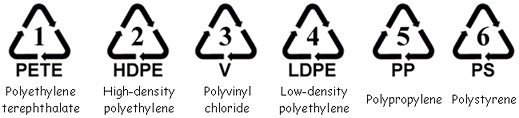
These symbols are more specific about what can be recycled.
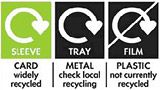
These symbols do not mean the product is recyclable, this only informs what the product contains.
This symbol means the product is for the regular bin.

Only the first two recycling and the last icons appear in the presentation and on any of the images in the compressed file. These are the most important icons that address the objective.
This video clip shows a line of items with a person checking for the symbol on the back. The icon is presented alongside what is filmed from the packaging. At the start of each item, a question is shown on the screen - Can I recycle it - followed by a zoom in and display of the symbol. The answers is given as 'Yes!!' or 'No!!' so feel free to pause and ask for learner inupt before that appears.
This next clip shows Marty walking up to and reacting to several items: Marty stops and dances when the items are recyclable. If the item is not recyclable, Marty either backs away or moves to the left or right. The colour cards were used throughout the video clip to command Marty's movements. The green card is used for Marty walking forward and the red, blue, purple and yellow cards are used to command Marty to act when he reaches an item. Learners are not shown where to place the cards, they are only
Learners need to take the cleaned materials or the printed images and investigate whether they are recyclable or not. Each of the images either feature the recycling symbol or the person with the waste bin. If you are bringing your own resources, be sure to have no ambiguous products that have what looks like a recycling symbol but is really clarifying what the product is made of. If you are using the printouts, it may help to watch the video that identifies the symbols, again.
Once learners have investigated the materials, have them line them up and place the appropriate colour card in front of each item. Learners need to decide what Marty will do when in front of each item. The video shows Marty always stopping and dancing when the item is recyclable and either walking back or walking to the sidewhen the item is not recyclable.
For learners who are waiting to use the colour cards with Marty, or who have completed the task, have them create a poster with the recycle icon to be used on containers in the school to remind adults and children which bins are for recycling. You will need to decide on the criteria for success for this task.
Celebrate the creative work that was accomplished: "You helped Marty to move and had him react to different things! (for those who complete the alternate idea) You also made a wonderful recycling poster for the school!"
Remind learners of the goals for the lesson, "Make Marty move and stop and say if something can be recycled."
Ask learners if they think they did well with the lesson using a familiar formative assessment strategy: thumbs up for good, thumbs to the side for OK, thumbs down for not so good; a green, yellow or red card, indicating their thoughts; a one to one chat about the learning; whole class feedback using a PMI (plus, minus, interesting) approach; or some other strategy with which the learners are familiar. One strategy document is included in the resources.
Read the closing part of the text to tie into the next lesson (from the Story Part 1 text).
Carry out any end of lesson routines. Collect the paper Martys for later use, making sure their names are on each. Personalising the Martys with colour is also a possibility.
Carry out any end of lesson routines.