Learn fractions with Marty
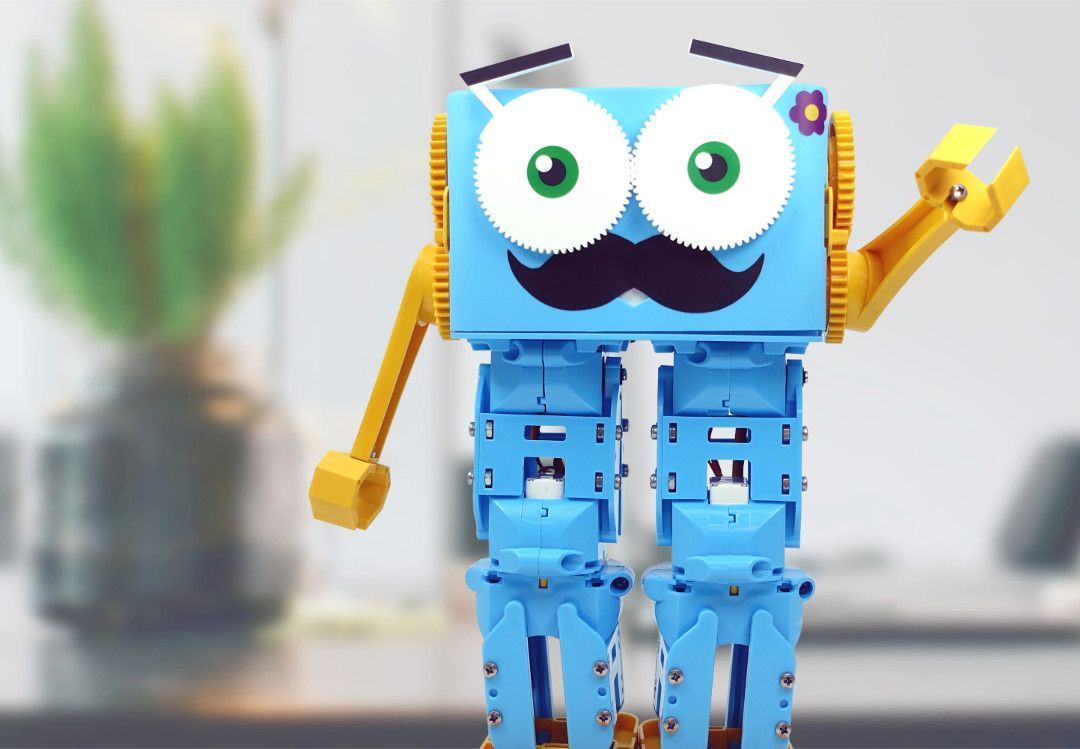
Learners will extend their understanding of fractions to naming collections of fractional shapes, when compared to a whole.
Understanding of how to find half of a shape or collection. Awareness that two different fractions can only be compared regarding the same whole.
N/A
Have the resources printed out so that each group, or table, has one copy of each. Have the presentation opened on the classroom display. Have the Martys for use charged and ready to act.
7 of 7 linked standards shown.
| Curriculum area | Linked standards |
|---|---|
| Mathematics: Number and Algebra - Fractions and decimals |
Select a code to read the full standard.
| Curriculum area | Linked standards |
|---|---|
| Mathematics: |
Select a code to read the full standard.
| Curriculum area | Linked standards |
|---|---|
| General standards |
Select a code to read the full standard.
| Curriculum area | Linked standards |
|---|---|
| Numeracy: Number, Money and Measure |
Select a code to read the full standard.
| Curriculum area | Linked standards |
|---|---|
| General standards |
Select a code to read the full standard.
| Curriculum area | Linked standards |
|---|---|
| Mathematics KS2: Number - fractions |
Select a code to read the full standard.
| Curriculum area | Linked standards |
|---|---|
| Elementary Math: Knowledge and Skills |
Select a code to read the full standard.
Challenge learners to think of fractions that are the same value despite looking a little different: 1/2, 2/4, 3/6, 4/8. Have them write a description of why they are the same, even though they have a different number of parts.
| Activity |
|---|
Warm-upShare with learners the learning objectives and success criteria for the lesson (slide 2 from the presentation). Show slide 3 from the presentation that demonstrates sharing a whole group between two people. Prepare for learners a small collections of classroom objects – crayons, building blocks, coins, etc. – for them to share amongst their group. Model the process of sharing out the total with the number of people; first, make sure the collection is divisible by the number of people in the group. Explanations are given in the teacher guide explaining the purpose behind this process. |
| Activity |
|---|
Get learningDisplay a range of objects that have been shared with different groups (slides 4 - 7, with suggested script). They will need to identify which of the groups have shared their items fairly and which ones have not. Learners will need to think about what it is that makes one example a fair share and another not. Emphasise that when sharing is done fairly, the different parts are called a fraction of the whole. To give the parts context for learners, have them think if they would be happy receiving any of the parts from the whole that are shared, cakes or pizza in this shape, for example. Use Marty to display what it looks like to walk a whole distance and then walk half the distance or some other unit fraction of the whole. For the examples provided, the whole length is 24 cm, Marty takes 12 steps that are 2cm each. The reason for choosing this number is because 24 is divisible by 2, 3, 4, 6 and 8. One note to clarify, for the sixth, Marty takes two 2cm steps, for the eighth, Marty takes two 1.5cm steps. |
Time for PracticeLearners will be tasked to compare different parts for the same whole and name them based on their comparative size. Learners will need to estimate the fraction each smaller shape represents, slide animations will show how to build the whole from parts on slides 8 and 9. Learners will use Marty to check that the fraction is the correct size to be called the fraction that it is (slide 10 shows Marty in action walking the whole distance, and slide 11 shows Marty walking a third of this distance). This activity is different from the sharing one. The sharing activity was creating the fraction by distributing the parts. This activity will be more focused on identifying the value of the different parts by comparing and combining. Learners should use their workbooks to demonstrate their understanding of which part of a whole matches with which fraction name. SupportHave the visuals to hand throughout the work. Learners need to see how much a fraction is, in their hands, so that they can begin to appreciate its value on a page, or later as a numerical value. |
| Activity |
|---|
CooldownBring learners back together to discuss the learning. Ask them if there were any fractions they found tricker to identify. Ask them if they noticed anything about the sizes and the numbers: the greater the denominator, the smaller the fraction. Suggested questions you might ask:
Carry out any end of lesson routines. |