Skip to content
Learning Site
Home

About

  • About Robotical
  • Case Studies
  • Meet the Team
  • Blog
  • Contact Us

Our Products

  • Marty the Robot
  • Axiom
  • Cog

Teach

  • Lessons & Resources
  • Marty for Educators
  • Funding & Grants
  • Professional Development
  • Why Teach STEM?
  • Coding Environments
  • Student Led Learning

Let's Code

  • Marty the Robot
  • Code Online
  • Marty Apple App
  • Marty Android App
  • Update your Marty
  • Cog
  • Code Online
  • Cog iOS App
  • Cog Android App
  • Axiom
  • Axiom Science

Support

  • Marty Get Started
  • Cog Quick Start Guide
  • Axiom Science Quick Start Guide
  • Support & FAQs
  • Marty V2 User Guides
  • Marty V1 Resources
  • Request Support
  • Request Top-Up Training

Shop

  • Marty the Robot and Physical Computing
  • Class Packs
  • Add Ons & Extras
  • Account
  • Shipping, Returns & Cancellations
  • Distributors
HomeLessonsUnits of workCurriculum standardsTutorials

Information

  • Lessons & Resources
  • Knowledge Base & User Guides
  • About Us
  • Shipping, Returns & Cancellation
  • Privacy Policy
  • Learning site privacy
  • Terms of Service
  • Partner Hub

Support & Help

  • Support & Help Center
  • Getting Started with Marty V2
  • Getting Started with Marty V1

Learning, Resources & Guides

  • Marty V2 Lessons Site
  • Marty V1 Lessons Site

Contact Us in the UK

Stanhope House,12 Stanhope Place,Edinburgh,United Kingdom,EH12 5HH
(+44) 0131 564 0922
hello@robotical.io
Contact Us

Contact Us in the US

2810N Church St, PMB 61694,Wilmington,Delaware,USA19802-4447
(+1) 833 886 1661
hello@robotical.io
Contact Us

Why not join our mailing list?

For News, New Products and Special Offers

Join mailing list

Copyright 2016-2026 © Robotical Ltd

All lessons
Marty app
CurrentPrevious

Science - The Pollution Solution

Use an automated device to combat the effects of pollution by restoring the natural environment or cleaning our waste.
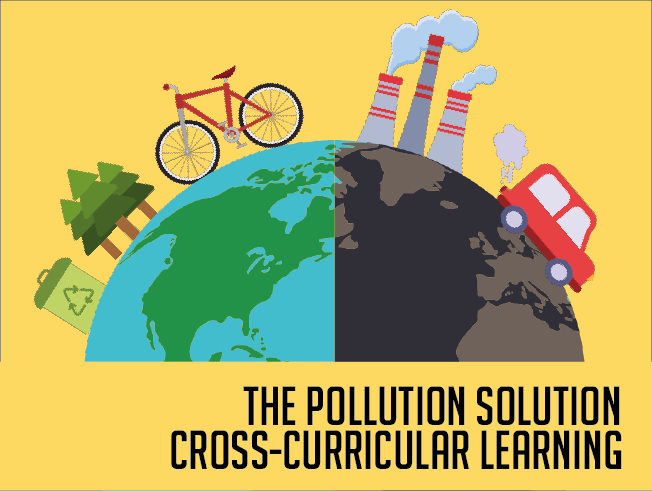
Science - The Pollution Solution
Estimated time
90 minutes
Difficulty
Advanced
Products
Marty V2

On this page

  1. Lesson overview
  2. Objectives & resources
  3. Key vocabulary
  4. Lesson plan
  5. Extensions and challenges
  6. Additional reading
  7. Curriculum standards

Extensions and challenges

Extend

For learners engaging in the waste activity, challenge learners to keep track of the collection amounts for each day using either a series of variables or lists. This will show the different amounts of waste collected each day and display them on the device screen.

For learners engaging in the tree-planting activity, challenge learners to calculate the total area of the planted forest. Have them scale up to the real world and state the land area required. Further challenge them to calculate the impact a forest of this size would have on carbon emissions.

For both challenges, learners could tidy up their code by creating functions.

Support

Have learners map out the route for waste-collection Marty on grid paper. This will guide learners to maintain the route that they need and support how they will check for waste.

Alternatively, have learners plot trees on grid paper to show how far Marty should walk before moving in a way to indicate planting. This will give a starting point for where Marty should walk and how often they should act to plant. The obstacle element of the code will be in addition to this.

Additional reading

Programming with MartyBlocks

Using the color sensor

Using the distance sensor

Curriculum standards

32
Choose your curriculum to see the relevant standards.

32 of 32 linked standards shown.

Australian CurriculumAustralia6
Curriculum areaLinked standards
Digital Technologies, Design & technologies: Design & Technologies
Digital Technologies, Design & technologies: Digital Technologies
Science: Science as a Human Endeavour

Select a code to read the full standard.

Digital Technologies, Design & technologies: Design & Technologies

  • ACTDEK040Critically analyse factors, including social, ethical and sustainability considerations, that impact on designed solutions for global preferred futures and the complex design and production processes involves
  • ACTDEP051Evaluate design ideas, processes and solutions against comprehensive criteria for success recognising the need for sustainability

Digital Technologies, Design & technologies: Digital Technologies

  • ACTDIP038Define and decompose real-world problems precisely, taking into account functional and non-functional requirements and including interviewing stakeholders to identify needs
  • ACTDIP040Design algorithms represented diagrammatically and in structured English and validate algorithms and programs through tracing and test cases

Science: Science as a Human Endeavour

  • ACHGK07Human-induced environmental changes that challenge sustainability
  • ACSHE194People use scientific knowledge to evaluate whether they accept claims, explanations or predictions, and advances in science can affect people’s lives, including generating new career opportunities
CSTA Education StandardsUSA2
Curriculum areaLinked standards
General standards

Select a code to read the full standard.

  • 2-AP-11Create clearly named variables that represent different data types and perform operations on their values.
  • 2-AP-12Design and iteratively develop programs that combine control structures, including nested loops and compound conditionals.
Curriculum for ExcellenceScotland14
Curriculum areaLinked standards
Health and Wellbeing: Mental, Emotional, Social and Physical Wellbeing
Literacy & English: Listening and Talking
Literacy & English: Writing
Science: Materials
Science: Planet Earth
Technologies: Computing Science
Technologies: Technological Developments in Society and Business

Select a code to read the full standard.

Health and Wellbeing: Mental, Emotional, Social and Physical Wellbeing

  • HWB 0-14a / HWB 1-14a / HWB 2-14a / HWB 3-14a / HWB 4-14aSocial wellbeing

Literacy & English: Listening and Talking

  • LIT 3-02aTools for listening and talking
  • LIT 4-02aTools for listening and talking
  • LIT 3-06a / LIT 4-06aFinding and using information

Literacy & English: Writing

  • LIT 1-25aOrganising and using information
  • LIT 1-26aOrganising and using information

Science: Materials

  • SCN 4-18aChemical Changes

Science: Planet Earth

  • SCN 4-04bEnergy sources and sustainability

Technologies: Computing Science

  • TCH 1-13aUnderstanding the world through computational thinking
  • TCH 1-15aDesigning, building and testing computing solutions

Technologies: Technological Developments in Society and Business

  • TCH 3-06aImpact, contribution, and relationship of technologies on business, the economy, politics, and the environment.
  • TCH 3-07aImpact, contribution, and relationship of technologies on business, the economy, politics, and the environment.
  • TCH 4-06aImpact, contribution, and relationship of technologies on business, the economy, politics, and the environment.
  • TCH 4-07aImpact, contribution, and relationship of technologies on business, the economy, politics, and the environment.
England's National CurriculumEngland2
Curriculum areaLinked standards
Computing, Design and Technology: Computing
Science KS4: Chemistry – Earth and atmospheric science

Select a code to read the full standard.

Computing, Design and Technology: Computing

  • ✔️Understand what algorithms are; how they are implemented as programs on digital devices; and that programs execute by following precise and unambiguous instructions

Science KS4: Chemistry – Earth and atmospheric science

  • ✔️Students should be taught about: potential effects of, and mitigation of, increased levels of carbon dioxide and methane on the Earth’s climate
ISTEUSA2
Curriculum areaLinked standards
International Society for Technology in Education (ISTE)

Select a code to read the full standard.

International Society for Technology in Education (ISTE)

  • 3dStudents build knowledge by actively exploring real-world issues and problems, developing ideas and theories and pursuing answers and solutions.
  • 7dStudents explore local and global issues and use collaborative technologies to work with others to investigate solutions.
Next Generation Science StandardsUSA2
Curriculum areaLinked standards
Earth and Space Sciences:
Science and Engineering Practices:

Select a code to read the full standard.

Earth and Space Sciences:

  • MS-ESS3-3Apply scientific principles to design a method for monitoring and minimizing a human impact on the environment.

Science and Engineering Practices:

  • ✔️Planning and Carrying Out Investigations
TEKSUSA4
Curriculum areaLinked standards
Elementary Science: Knowledge and Skills
Elementary Technology Applications: Kindergarten to Grade 2

Select a code to read the full standard.

Elementary Science: Knowledge and Skills

  • 7.a.DEarth and space phenomena can be observed in a variety of settings. Both natural events and human activities can impact Earth systems. There are characteristics of Earth and relationships to objects in our solar system that allow life to exist.
  • 7.b.8The student knows that natural events and human activity can impact Earth systems

Elementary Technology Applications: Kindergarten to Grade 2

  • 1.ACreativity and innovation. The student uses creative thinking and innovative processes to construct knowledge and develop digital products. The student is expected to: apply prior knowledge to develop new ideas, products, and processes;
  • 1.BCreativity and innovation. The student uses creative thinking and innovative processes to construct knowledge and develop digital products. The student is expected to: create original products using a variety of resources;

Resources

Learner resources

  • Workbook for The Pollution SolutionFile links loading
  • Challenge 1File links loading
  • Challenge 2File links loading

Educator resources

  • Presentation for The Pollution SolutionFile links loading
  • Teacher GuideFile links loading
  • Teacher Code Guide for Waste CollectionFile links loading
  • Teacher Code Guide for Tree PlantingFile links loading

Lesson overview

Pollution on land, in the sea and in the air is an ongoing problem for the Earth and its inhabitants. What can we do to better understand where pollution comes from and what can we do to remove pollution from our environment in an efficient, or even automated, way?

Learn about the effects of pollution on our health. Then, investigate a potential solution where people may be able to use robots to efficiently, and tirelessly, cleanse an environment of waste or begin to restore a location's natural beauty while improving the air quality.

Prerequisite knowledge

Experience with MartyBlocks, work with sensors and variables

Cross-curricular links

Science - Earth and Human Activity

Learning objectives

  • I can devise a method for finding and identifying different objects.
  • I can automate a device to react differently depending on what it detects.

Resources and equipment

  • Marty V2 - one for each group of learners
  • a range of classroom objects that could symbolise trees or waste products
  • color cards
  • Marty V2 color sensor
  • Marty V2 distance sensor for detecting obstacles (optional)

Key vocabulary

  • particles
  • pollution
  • automated
  • scale

Lesson plan

Pre-Lesson Preparation

This lesson will involve learners coding Marty to identify different categories of waste and non-waste materials and react to them differently to inform learners of their location and / or quantity. There are suggested code examples in the two attached code resource files, which describe potential solutions.

This could be a long 90-minute session or two shorter 45-minuts sessions to allow for the required code planning and testing.

Warm-Up

Share with learners the objectives and success criteria from slide 3 of the presentation.

Ask learners what effect they think air pollution has on them, in their current environment. Share with learners that we will carry out a simulation focusing on the effect pollution has on our lungs and the lungs' ability to share oxygen with the body.

Below is the procedure for the game

Preparation:

Mark an area, about 3m x 3m with cones or chalk. Have a stopwatch, either from a phone or a physical stopwatch. Divide the class into two groups. One group will be oxygen and the other group will be particles of pollution suspended in the air. From the pollution group, have between 6 and 8 learners make a circle to symbolize the rest of the body.

1. Explain to learners that the lungs take in oxygen from the environment and deliver it to the body.

2. Tell learners that you are going to time how long it takes for all the oxygen to pass through the lungs, be delivered to the body and exit the body through the lungs as carbon dioxide.Weave in and out of the learners representing the human body.

  • Start the stopwatch
  • Model this by telling learners you are an oxygen atom.
  • Pass through the square representing the lungs.
  • Pass through the lungs again.
  • Stop the stopwatch.

3. Start the timer.

4. Have the learners who are the oxygen atoms run through the lungs area one at a time, making a chain of oxygen atoms, but not linked in any way.

5. Have the chain of oxygen atoms weave in and out of the 'body' circle.

6. Have learners pass through the lungs again.

7. Stop the stopwatch.

8. Repeat the process but this time, oxygen atoms pair with available pollution particles; not every oxygen atom will have a pollution particle.

9. This time, when oxygen passes through the lungs, their partner pollution particle remains in the lungs becoming an obstacle to the learners that follow.

10. Stop the stopwatch after all learners have passed through the now polluted lungs.

11. Swap groups for oxygen and pollution particles / human body.

Compare results between the time it takes for breathing with and without pollution in the lungs. Consider that a person needs so much oxygen to efficiently carry out daily tasks. What would a person need to do to deliver the same amount of oxygen with the pollutants as without any pollutants? It would take a lot more energy to pull in the oxygen at a greater rate to offset the effect of the pollution particles; you would be much more tired breathing if you had pollution in your lungs.

Get Learning

Revise past learning about a variety of pollutants for air, land, and water. Have learners work in small groups and recall the effect of different examples of pollution affecting the environment, in their workbooks.

Share with learners slides 3 and 4 from the presentation to showcase automated solutions for supporting the environment. The notes from the presentation should be used to guide the discussion. Learners should use their workbooks to record any insights from the discussion.

Time for Practice

Following the discussion, learners need to choose a challenge from slide 5. The description for each challenge tells learners the goal of their work and the requirements to achieve success. These challenges should be completed in groups. On slide 6, learners will see the blocks that must be included in their technology work along with a description of what each block does.

Learners should be given sufficient time for planning their solution to the challenge of automating one of the two tasks on slide 5. It would be helpful to learners to have this slide displayed through their design and testing work or print out the challenge resource page to make it available to groups.

Learners will work in their groups to discuss the most efficient ways to code Marty to react to the environment and carry out the assigned job without human interference once the code starts. Take time to move around the classroom asking questions about the sequence they have chosen and the calculations they have made, prior to testing.

Cool Down

Bring learners back together to discuss if they found anything interesting about automation and environmental solutions.

Suggested questions you might ask:

  • Are there benefits to having machines, or specifically robots, take the place of humans for some of the tasks of environmental support?
  • Are there challenges to having an automated solution to environmental problems?
  • How do the benefits compare to the challenges of automated solutions? (give learners time to consider and discuss this question, it may lead to future learning, research opportunities or motivation to improve on their developed code.

Ask for feedback on their group coding experiences:

  • Was there anything new you learned while taking part in these challenges?
  • Is there anything you will remember for future challenges?
  • Was there anything you learned previously that was essential for completing today's challenges?

Log off and collect all devices.

Carry out any end of lesson routines.