Skip to content
Learning Site
Home

About

  • About Robotical
  • Case Studies
  • Meet the Team
  • Blog
  • Contact Us

Our Products

  • Marty the Robot
  • Axiom
  • Cog

Teach

  • Lessons & Resources
  • Marty for Educators
  • Funding & Grants
  • Professional Development
  • Why Teach STEM?
  • Coding Environments
  • Student Led Learning

Let's Code

  • Marty the Robot
  • Code Online
  • Marty Apple App
  • Marty Android App
  • Update your Marty
  • Cog
  • Code Online
  • Cog iOS App
  • Cog Android App
  • Axiom
  • Axiom Science

Support

  • Marty Get Started
  • Cog Quick Start Guide
  • Axiom Science Quick Start Guide
  • Support & FAQs
  • Marty V2 User Guides
  • Marty V1 Resources
  • Request Support
  • Request Top-Up Training

Shop

  • Marty the Robot and Physical Computing
  • Class Packs
  • Add Ons & Extras
  • Account
  • Shipping, Returns & Cancellations
  • Distributors
HomeLessonsUnits of workCurriculum standardsTutorials

Information

  • Lessons & Resources
  • Knowledge Base & User Guides
  • About Us
  • Shipping, Returns & Cancellation
  • Privacy Policy
  • Learning site privacy
  • Terms of Service
  • Partner Hub

Support & Help

  • Support & Help Center
  • Getting Started with Marty V2
  • Getting Started with Marty V1

Learning, Resources & Guides

  • Marty V2 Lessons Site
  • Marty V1 Lessons Site

Contact Us in the UK

Stanhope House,12 Stanhope Place,Edinburgh,United Kingdom,EH12 5HH
(+44) 0131 564 0922
hello@robotical.io
Contact Us

Contact Us in the US

2810N Church St, PMB 61694,Wilmington,Delaware,USA19802-4447
(+1) 833 886 1661
hello@robotical.io
Contact Us

Why not join our mailing list?

For News, New Products and Special Offers

Join mailing list

Copyright 2016-2026 © Robotical Ltd

All lessons
Marty app
CurrentPrevious

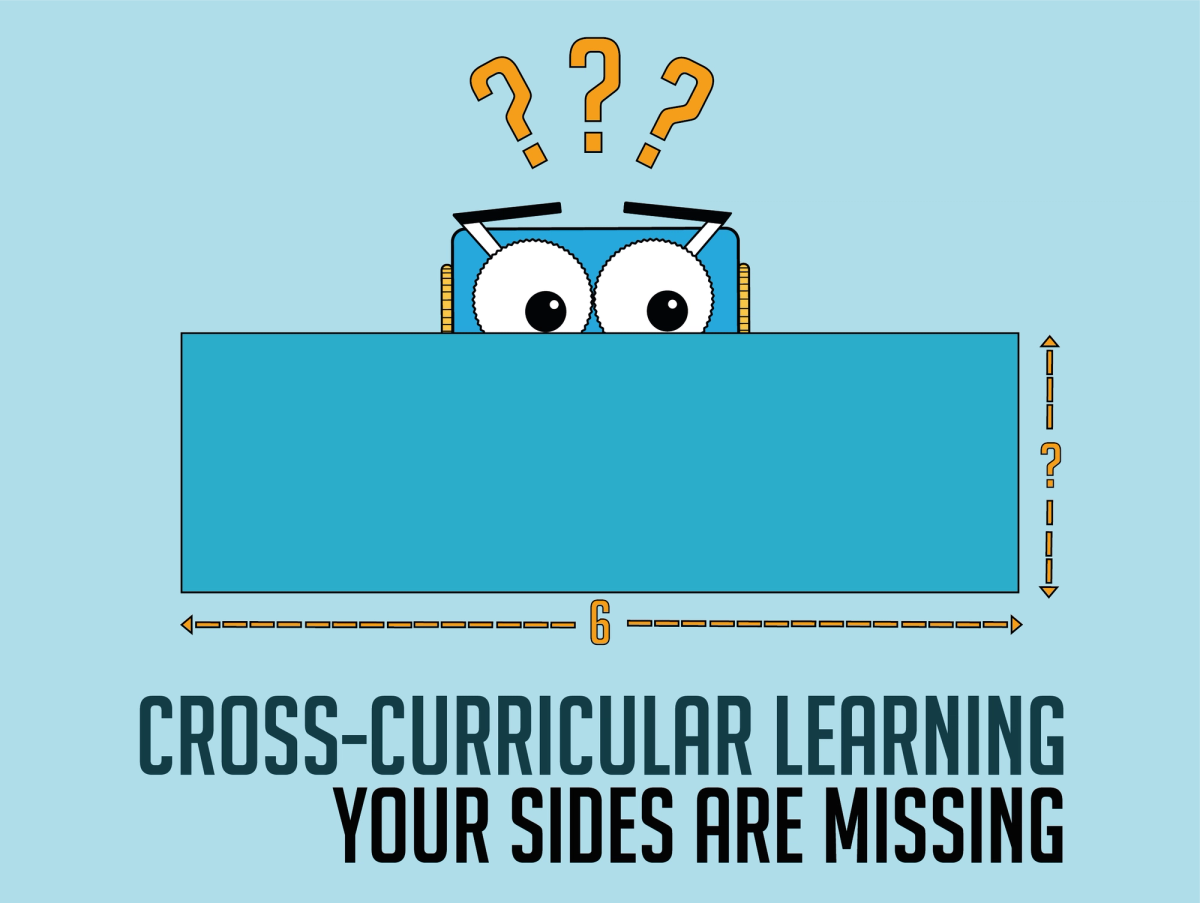
Middle School Mathematics - Lesson 2 - Your Sides are Missing

Use Marty to demonstrate the missing side in a rectangle
Middle School Mathematics - Lesson 2 - Your Sides are Missing
Age / stage
11 - 13
Estimated time
45 minutes
Difficulty
Intermediate
Products
Marty V2

On this page

  1. Lesson overview
  2. Before you begin
  3. Warm-up
  4. Get learning
  5. Further challenge ideas
  6. Cool down
  7. Additional reading
  8. Curriculum standards

Lesson overview

Learners have worked with perimeter before. This lesson brings equations and geoometry measurements together to find missing side lengths.

Learning objectives

  • I can solve for a missing measurement when working with perimeter.
  • I can use an equation to check my work.

Key vocabulary

  • perimeter
  • equation
  • length
  • width
  • variable
  • unknown

Prior learning

Knowledge of shape properties and perimeter

Cross-curricular links

Mathematics - Angles

Before you begin

Equipment

  • Activity pages
  • Marty the Robot V2
  • A device with Blocks to code the equations

Technical information

Pre-Lesson Preparation

Open the Marty the Robot app and click on Blocks, connect your Marty and then click on save/load at the top and click load from file and select this file:

Marty's Perimeter Walk code.sb3File · 352 KB

Alternatively, build the code from scratch, which is described in the teacher guide.

This code will have Marty walk the perimeter of a rectangle using the perimeter and the value of one side. To vary the values, select a different side length and perimeter. Additionally, feel free to change width to length, which will determine whether the sidesteps or forward and back steps are entered or calculated.

Warm-up

TimingActivityPossible adaptations
Timing—

Warm-Up

Share with learners the objectives and success criteria for the day's lesson, from slide 2 of the presentation in the educator resource section; perhaps display this before the lesson starts and keep it displayed until another slide is needed.

Distribute the activity page from the resources section. On it, are several rectangular shapes with different dimensions. Challenge learners to fill each larger rectangle with 3, 4 or more rectangles. The condition is that only two rectangles may share the same length or width. All other rectangles must have unique dimensions. An example has been completed on the page.

Possible adaptations—

Get learning

TimingActivityPossible adaptations
Timing—

Get Learning

Share with learners that perimeter is not a new topic in mathematics but using equations might be. The presentation, from slide 3, reviews perimeter and demonstrates how an equation can be used to solve for the perimeter and for different missing side lengths. Running the code from the teacher guide will show Marty walking the perimeter of a rectangle given only the perimeter and the length of one side. The video below shows an example of Marty walking the perimeter of a rectangle. The side length of 8 is given along with the perimeter of 22. Marty uses the code to walk a 3 x 8 rectangle, as shown in the video below.

Use the code to have Marty walk as many rectangles as you need to explore the use of the equation P=2(l+w) or P=2l+2w.

Possible adaptations—
Timing—

Time for Practice

Learners are to complete the different perimeter and side length questions for rectangles showing their work with the perimeter equation. If you have a Marty available for each group and are able to prepare the code for this, it would be a good idea to have learners test their answers with their Marty. Alternatively, if you could walk around the room and use the class Marty to test their work, it will bring their calculations to life.

Learners will note that on the second page of independent work, there are kites and parallelograms. Challenge them to see that there are similar properties with these shapes and rectangles: they both have two pairs of equal sides and so can still use an equation like that of a rectangle.

Cool down

TimingActivityPossible adaptations
Timing—

Cool Down

Bring learners back together to discuss the challenges they faced and overcame. Have learners share any strategies they used to identify hte missing side length of a shape. How did they use the perimeter formula or did they use another method that was effective.

Suggested questions you might ask:

  • What do you remember about the opposite sides of a rectangle?
  • Why does 2l + 2w allow us to quickly calculate a perimeter?
  • Why does (P-2l)/2 allow us to quickly calculate a width?

Carry out any end of lesson routines.

Possible adaptations—

Additional reading

Connecting with Blocks

Curriculum standards

23
Choose your curriculum to see the relevant standards.

23 of 23 linked standards shown.

Australian CurriculumAustralia2
Curriculum areaLinked standards
Digital Technologies, Design & technologies: Digital Technologies
Mathematics: Number and Algebra - Patterns and algebra

Select a code to read the full standard.

Digital Technologies, Design & technologies: Digital Technologies

  • ACTDIP029Design algorithms represented diagrammatically and in English, and trace algorithms to predict output for a given input and to identify errors

Mathematics: Number and Algebra - Patterns and algebra

  • ACMNA175Introduce the concept of variables as a way of representing numbers using letters
Common CoreUSA2
Curriculum areaLinked standards
Mathematics:

Select a code to read the full standard.

Mathematics:

  • 7.EE.B.4Use variables to represent quantities in a real-world or mathematical problem, and construct simple equations and inequalities to solve problems by reasoning about the quantities.
  • 7.EE.B.4.ASolve word problems leading to equations of the form px + q = r and p(x + q) = r, where p, q, and r are specific rational numbers. Solve equations of these forms fluently. Compare an algebraic solution to an arithmetic solution, identifying the sequence of the operations used in each approach. For example, the perimeter of a rectangle is 54 cm. Its length is 6 cm. What is its width?
CSTA Education StandardsUSA2
Curriculum areaLinked standards
General standards

Select a code to read the full standard.

  • 2-CS-02Design projects that combine hardware and software components to collect and exchange data.
  • 2-AP-11Create clearly named variables that represent different data types and perform operations on their values.
Curriculum for ExcellenceScotland10
Curriculum areaLinked standards
Health and Wellbeing: Mental, Emotional, Social and Physical Wellbeing
Literacy & English: Listening and Talking
Numeracy: Number, Money and Measure
Technologies: Computing Science

Select a code to read the full standard.

Health and Wellbeing: Mental, Emotional, Social and Physical Wellbeing

  • HWB 0-11a / HWB 1-11a / HWB 2-11a / HWB 3-11a / HWB 4-11Social wellbeing

Literacy & English: Listening and Talking

  • LIT 2-02aTools for listening and talking
  • LIT 3-02aTools for listening and talking
  • LIT 2-06aFinding and using information
  • LIT 3-06a / LIT 4-06aFinding and using information

Numeracy: Number, Money and Measure

  • MTH 2-15aExpressions and equations
  • MTH 3-15aExpressions and equations
  • MTH 3-15bExpressions and equations

Technologies: Computing Science

  • TCH 2-13aUnderstanding the world through computational thinking
  • TCH 3-13aUnderstanding the world through computational thinking
England's National CurriculumEngland2
Curriculum areaLinked standards
Computing, Design and Technology: Computing
Mathematics KS3: Geometry and measures

Select a code to read the full standard.

Computing, Design and Technology: Computing

  • ✔️Understand what algorithms are; how they are implemented as programs on digital devices; and that programs execute by following precise and unambiguous instructions

Mathematics KS3: Geometry and measures

  • ✔️Pupils should be taught to: derive and apply formulae to calculate and solve problems involving: perimeter and area of triangles, parallelograms, trapezia, volume of cuboids (including cubes) and other prisms (including cylinders)
Georgia Standards of ExcellenceUSA1
Curriculum areaLinked standards
Mathematics:

Select a code to read the full standard.

Mathematics:

  • 7.PAR.3.1Construct algebraic equations to solve practical problems leading to equations of the form px + q = r and p(x + q) = r, where p, q, and r are specific rational numbers. Interpret the solution based on the situation.
TEKSUSA4
Curriculum areaLinked standards
Middle School Math: Knowledge and Skills
Middle School Technology Applications: Grade 6 to Grade 8

Select a code to read the full standard.

Middle School Math: Knowledge and Skills

  • 7.10.AThe student is expected to write one-variable, two-step equations and inequalities to represent constraints or conditions within problems
  • 7.10.CThe student is expected to write a corresponding real-world problem given a one-variable, two-step equation or inequality

Middle School Technology Applications: Grade 6 to Grade 8

  • 4.ACritical thinking, problem solving, and decision making. The student makes informed decisions by applying critical-thinking and problem-solving skills. The student is expected to: identify and define relevant problems and significant questions for investigation;
  • 4.CCritical thinking, problem solving, and decision making. The student makes informed decisions by applying critical-thinking and problem-solving skills. The student is expected to: collect and analyze data to identify solutions and make informed decisions;

Resources

Learner resources

  • Workbook for Your Sides are MissingFile links loading

Educator resources

  • Teacher guideFile links loading
  • Presentation for Your Sides are MissingFile links loading
Possible adaptations

Support

Support learners in distributing terms in the equation and in isolating the unknown value. Use the startegies that are most successful for your group of learners.

Further challenge ideas

Extend

Challenge learners to think of other equations they can create with regular shapes. Rectangles are not regular but have characteristics that are fixed.

Watch on YouTube