Use Marty to demonstrate the missing side in a rectangle
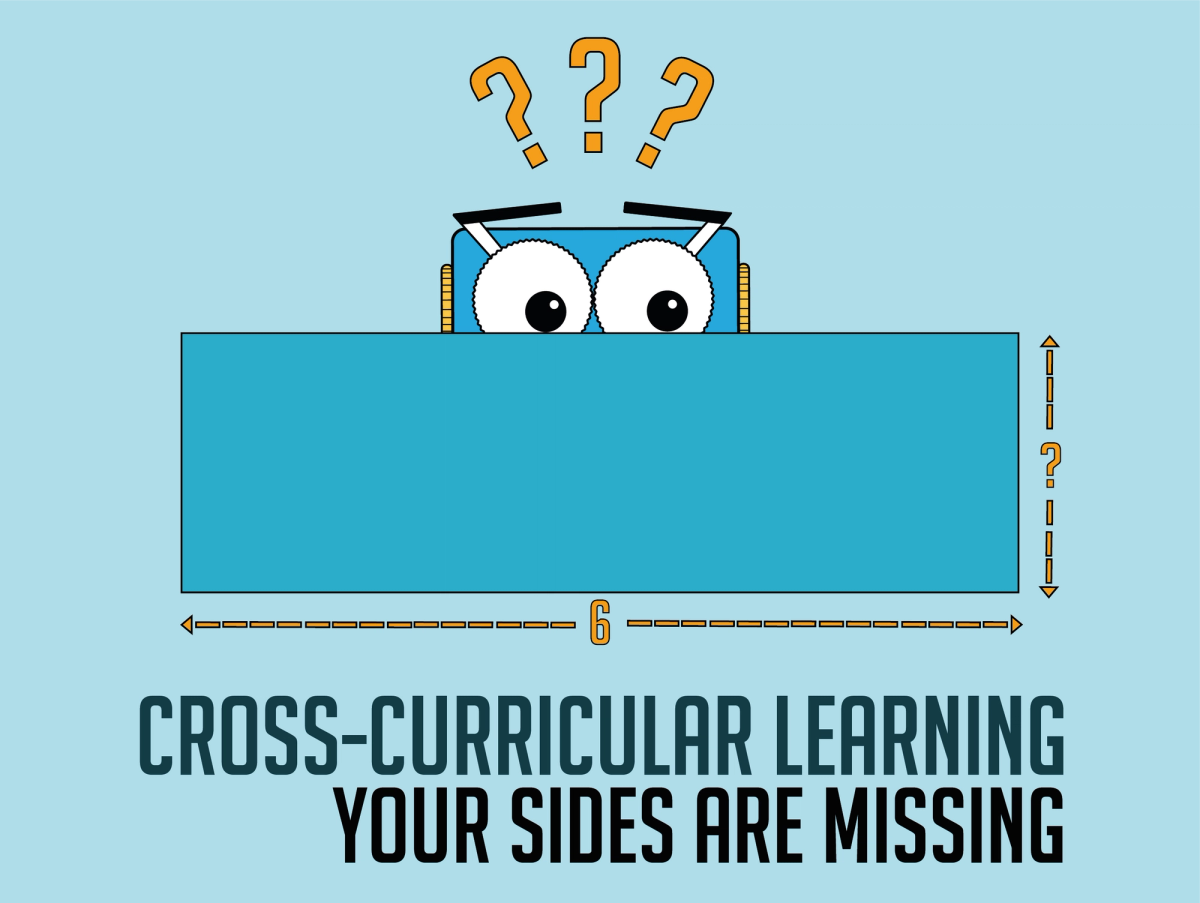
Challenge learners to think of other equations they can create with regular shapes. Rectangles are not regular but have characteristics that are fixed.
Support learners in distributing terms in the equation and in isolating the unknown value. Use the startegies that are most successful for your group of learners.
23 of 23 linked standards shown.
| Curriculum area | Linked standards |
|---|---|
| Digital Technologies, Design & technologies: Digital Technologies | |
| Mathematics: Number and Algebra - Patterns and algebra |
Select a code to read the full standard.
| Curriculum area | Linked standards |
|---|---|
| Mathematics: |
Select a code to read the full standard.
| Curriculum area | Linked standards |
|---|---|
| General standards |
Select a code to read the full standard.
| Curriculum area | Linked standards |
|---|---|
| Health and Wellbeing: Mental, Emotional, Social and Physical Wellbeing | |
| Literacy & English: Listening and Talking | |
| Numeracy: Number, Money and Measure | |
| Technologies: Computing Science |
Select a code to read the full standard.
| Curriculum area | Linked standards |
|---|---|
| Computing, Design and Technology: Computing | |
| Mathematics KS3: Geometry and measures |
Select a code to read the full standard.
| Curriculum area | Linked standards |
|---|---|
| Mathematics: |
Select a code to read the full standard.
| Curriculum area | Linked standards |
|---|---|
| Middle School Math: Knowledge and Skills | |
| Middle School Technology Applications: Grade 6 to Grade 8 |
Select a code to read the full standard.
Learners have worked with perimeter before. This lesson brings equations and geoometry measurements together to find missing side lengths.
Knowledge of shape properties and perimeter
Mathematics - Angles
Open the Marty the Robot app and build the code, that is described in the teacher guide, in MartyBlocks.
This code will have Marty walk the perimeter of a rectangle using the perimeter and the value of one side. To vary the values, select a different side length and perimeter. Additionally, feel free to change width to length, which will determine whether the sidesteps or forward and back steps are entered or calculated.
Share with learners the objectives and success criteria for the day's lesson, from slide 2 of the presentation in the educator resource section; perhaps display this before the lesson starts and keep it displayed until another slide is needed.
Distribute the activity page from the resources section. On it, are several rectangular shapes with different dimensions. Challenge learners to fill each larger rectangle with 3, 4 or more rectangles. The condition is that only two rectangles may share the same length or width. All other rectangles must have unique dimensions. An example has been completed on the page.
Share with learners that perimeter is not a new topic in mathematics but using equations might be. The presentation, from slide 3, reviews perimeter and demonstrates how an equation can be used to solve for the perimeter and for different missing side lengths. Running the code from the teacher guide will show Marty walking the perimeter of a rectangle given only the perimeter and the length of one side. The video below shows an example of Marty walking the perimeter of a rectangle. The side length of 8 is given along with the perimeter of 22. Marty uses the code to walk a 3 x 8 rectangle, as shown in the video below.
Use the code to have Marty walk as many rectangles as you need to explore the use of the equation P=2(l+w) or P=2l+2w.
Learners are to complete the different perimeter and side length questions for rectangles showing their work with the perimeter equation. If you have a Marty available for each group and are able to prepare the code for this, it would be a good idea to have learners test their answers with their Marty. Alternatively, if you could walk around the room and use the class Marty to test their work, it will bring their calculations to life.
Learners will note that on the second page of independent work, there are kites and parallelograms. Challenge them to see that there are similar properties with these shapes and rectangles: they both have two pairs of equal sides and so can still use an equation like that of a rectangle.
Bring learners back together to discuss the challenges they faced and overcame. Have learners share any strategies they used to identify hte missing side length of a shape. How did they use the perimeter formula or did they use another method that was effective.
Suggested questions you might ask:
Carry out any end of lesson routines.